How can a missing tooth be replaced? The best treatment options
Losing even one tooth can affect much more than the appearance of a smile. It changes the way chewing forces are distributed and may gradually influence the neighbouring teeth, opposing tooth and jaw bone. Modern dentistry offers several ways to restore the gap, each suited to different needs and clinical conditions.
Why should you not leave an empty space?
After a tooth is lost, nearby teeth may slowly tilt or move into the gap, while the opposing tooth can over-erupt. Food may become trapped more easily, hygiene can become more difficult and the bite may change.
The bone in the area also begins to shrink because it is no longer stimulated by the tooth root. Replacing the tooth early usually provides more treatment options and helps preserve stable function.
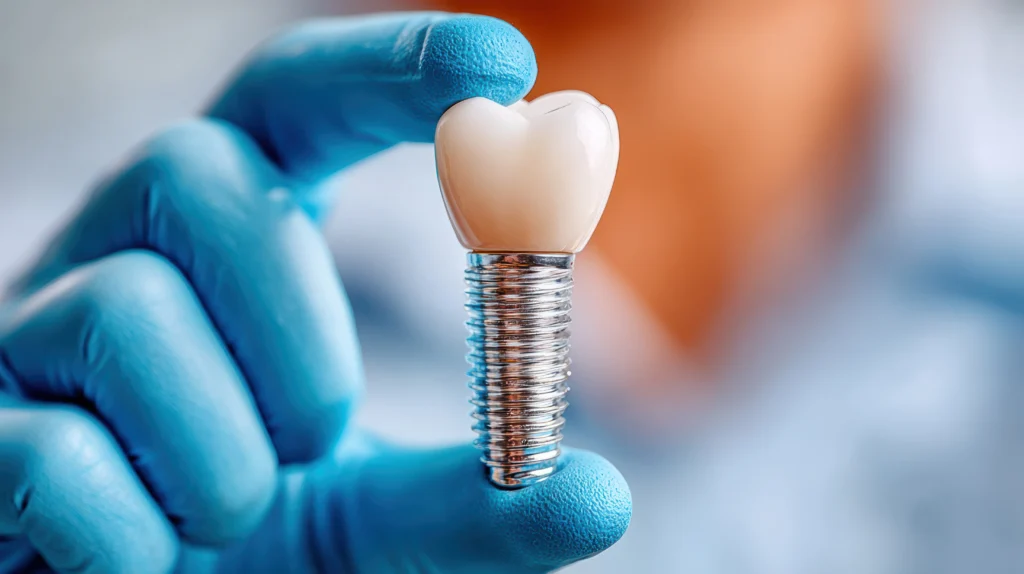
A dental implant – the solution most similar to a natural tooth
An implant is a small titanium or ceramic fixture placed in the jaw bone to replace the missing root. After it integrates with the bone, it supports an individual crown.
Its main advantages are:
- neighbouring teeth do not need to be prepared,
- good stability and chewing comfort,
- support for the bone in the missing-tooth area,
- a natural appearance and independent restoration.
Implant treatment requires adequate bone, healthy gums and appropriate general health. In some cases bone regeneration is needed before or during implant placement.

A dental bridge – a traditional way to restore a gap
A bridge consists of a replacement tooth connected to crowns placed on the neighbouring teeth. It is fixed permanently and can restore function and appearance relatively quickly.
A bridge may be a good option when the teeth next to the gap already require crowns. Its limitation is that these teeth usually need to be prepared, even if they are otherwise healthy. Hygiene beneath the replacement tooth also requires special floss or interdental brushes.

A removable denture – an option for larger gaps or a limited budget
A removable denture can replace one or several missing teeth and is taken out by the patient for cleaning. Acrylic, skeletal and other modern designs are available.
This is usually the most economical solution and does not always require surgery. However, it may be less stable and comfortable than a fixed restoration, requires an adaptation period and does not prevent bone loss in the same way as an implant. Regular checks and adjustments are important.

What determines the best method?
The choice depends on:
- the number and location of missing teeth,
- the condition of neighbouring teeth and gums,
- the amount and quality of bone,
- general health and medication,
- expectations regarding comfort and appearance,
- treatment time and budget.
A clinical examination and appropriate imaging are needed before a reliable plan can be prepared.
Is an implant always the best option?
An implant is often the most conservative fixed solution for a single missing tooth, but it is not automatically the best choice for everyone. Significant bone loss, uncontrolled systemic disease, active gum disease or personal preferences may favour another method.
Sometimes a bridge offers a very predictable result, especially when adjacent teeth already need extensive restoration. For multiple missing teeth, implants can also be used to stabilise a bridge or removable denture.
How much does replacing a missing tooth cost?
The total price depends on the selected method and the preparation required. Implant treatment may include diagnostics, implant placement, possible bone regeneration, an abutment and a crown. A bridge is priced according to the number and material of its units, while denture cost depends on its design.
The lowest initial price should not be the only criterion. Durability, maintenance, effect on neighbouring teeth and possible future treatment should also be considered.
Summary
A missing tooth should be replaced not only for aesthetic reasons, but also to maintain stable chewing, tooth position and bone. The main options are an implant-supported crown, a fixed bridge and a removable denture.
There is no single solution that is best for every patient. The most suitable method is selected after an examination, imaging and discussion of health, expectations and budget.